
Most flower gardeners do their planning in the winter months—poring over seed catalogs, sketching layouts in journals, and making wish lists while snow covers the ground. But me? I’m doing all that now… in August!
Why August? A few good reasons:
- 🌼 Perennial sales – This is the best time to find bargains on plants, and if I bring home a trunk full, I’d better have a plan for where they’ll go.
- 🌞 Lessons learned – By late summer, my mistakes are obvious. Plants that flopped, spots that need color, or designs that didn’t quite work are fresh in my mind.
- ❄️ Time indoors – When it’s too hot to garden, I retreat to the air conditioning with my journal and garden maps. That’s when the dreaming begins.
So in case you’re interested, here’s a look at my planning process—what bloomed this year, what I’m changing for next year, and the lessons I’m learning along the way. I’ll be breaking it into a series of posts because, well, I have a lot of gardens!
This first post will take you through my front yard gardens, with a focus on how each little space looked this year and what I’m planning for next.
- The Driveway Garden
- The Cottage Garden
- The Culinary Herb Garden
- The Tender Tuber Garden
- The Patio Border
- The Container Gardens
- The Kitchen Border
- The Tea Garden
- The Shade Garden
- The Rock Garden
The Driveway Garden
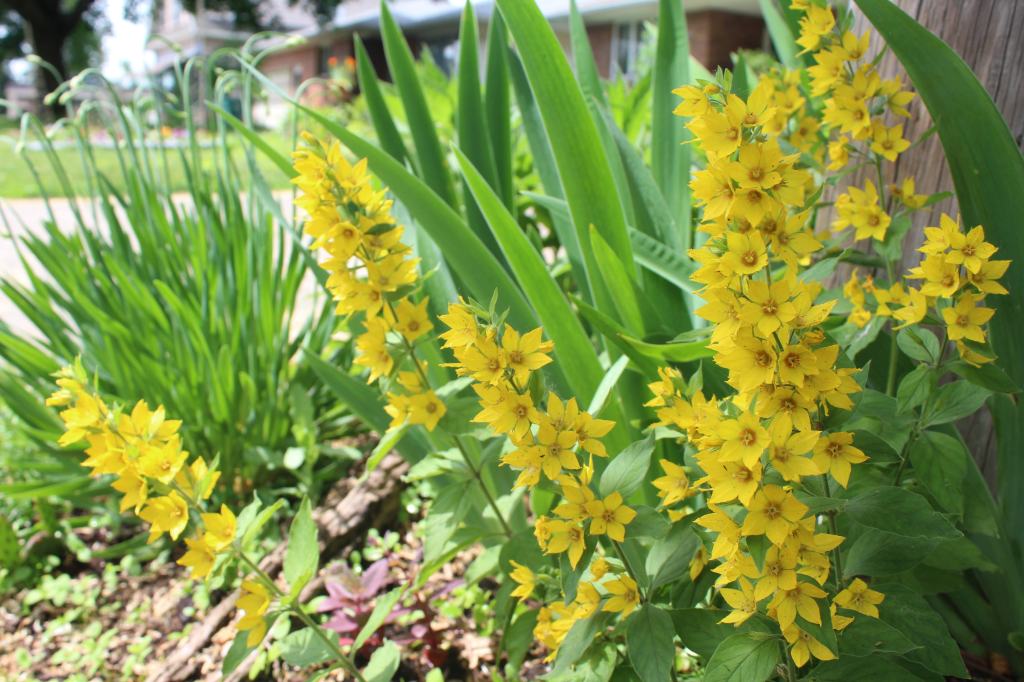
This little corner bed is the first thing anyone sees when they pull into my driveway, so I like it to always have a cheerful pop of color—especially yellow. It’s a small space, but I’ve planted it with something blooming in every season so it greets visitors all year long.
What bloomed this year:
- Early spring: daffodils and creeping phlox
- Late spring: orange daylilies and stonecrop
- Early summer: yellow loosestrife and bearded iris
- Late summer: black-eyed Susans and Millennium alliums
- Fall: mums – I think they were yellow and deep red
Next year’s plan:
- Add a few yellow daylilies (possibly divisions from Mom’s garden).
- Move the Millennium alliums to the Allium Garden for a more cohesive display.
- Switch the dark red mums out for white or orange – something with more pop.
Lessons learned:
Keep it simple.
Focus on the plants that shine and brighten people’s day.
Make a plan for year-round color with plants that are low maintenance.
The yellow theme makes this corner feel welcoming in every season.
The Cottage Garden

This might be my favorite garden in the front yard (though the Rock Garden gives it some competition). It’s tucked into a triangle-shaped corner between my driveway and the walkway to the front door, bordered by two pieces of white picket fencing. I think of it as the most “classic cottage” part of my yard, filled with tall, columnar blooms and other old-fashioned flowers. It’s the garden that makes me smile every time I walk past. I’ll be sharing the full story of how this Cottage Garden came to be in a separate post.
What bloomed this year
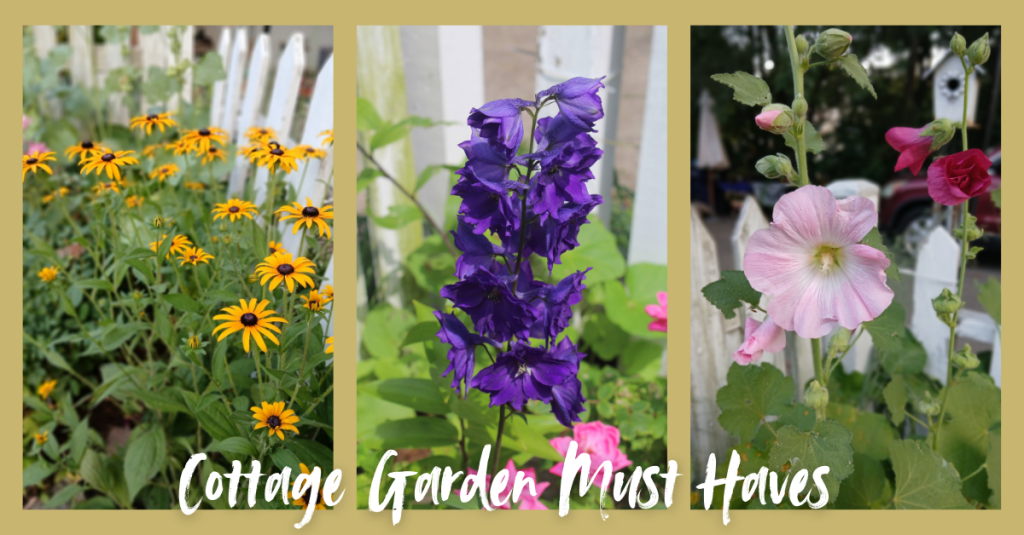
- Hollyhocks – This is my first year growing them. I’ve been wanting to ever since I started this garden because they are so classic “cottage”. I remember making hollyhock dolls out of the blooms at Cousin Catherines’ farm when I was a child. I’ve been afraid to try them because the leaves often get rust on them and look unattractive, but I decided that if I plant them at the back of the garden, the other plants would cover that up. It worked beautifully, and now I want to grow them from now on.
- Penstemon – I discovered these tall, graceful pale pink clusters on dark red stems at a garage sale at a house with beautiful gardens. When I found them at Home Depot, I just had to get them. They add the height to my cottage garden before the hollyhocks get going. When the blooms are done, I cut them down to the ground and the rest of the foliage is a nice ground cover for the rest of the year.
- Delphinium – I can’t get enough of the deep royal blues, purples, and periwinkles these flowers display in tall columns. But I’ll need to plant more next year to keep the show going.
- Lupines – Still a struggle for me, but I keep trying from seed. I think they would look glorious in this corner.
- Knockout and mini roses – Pretty, but they’ll need consistent fertilizing and deadheading to keep looking their best.
- Dwarf hydrangea – Didn’t do well here; I’ll be moving it to the backyard.
- Dward butterfly bush – Doing find, but it looks like it doesn’t belong. It also requires a lot of deadheading to keep it neat. I think I will move this to the backyard where I have a wildlife area.
- Black-eyed Susans – A little buggy, but my turmeric spray kept the aphids at bay. They are the heroes of this garden, blooming for weeks on end in the summer.
- Orlaya – Love, love, love this beautiful lacy flower. I was so happy that it came back again on it’s own and seeded out some babies. I’ll watch for new seedlings in spring to transplant.
- Blue lobelia border – Gorgeous in spring and early summer, but faded in the heat. I love how the color goes with the delphiniums, but I need to have another flower between them that fills in from August on.
- Sweet alyssum – I had only a couple clumps of this here. Next year I want a whole border. Luckily, if I wait for it to go to seed, I can just sprinkle the seeds where I want them to grow next year.
- Lilies (Oriental/Asian) – Still going strong; I’ll add more next year. I really want the “Stargazer” oriental lilies. I must be diligent about catching lily beetles though.
- Liatris – Also known as Blazing Star – I ended up cutting most of these for bouquets because they’re not my favorite. Maybe I should move them to the flower farm. It would make room for more lilies.
- Ornamental grasses – Slow to start, but beautiful now. I wish they were taller to hide my car in the background whenever I take pictures of this garden. Maybe I need to dig up some of Mom’s miscanthus and bring it over. It’s probably 8 feet tall!
- Wild geranium – Added a soft green groundcover by the driveway. I don’t like to plant anything on that side that minds being stepped on by piano students, so it’s perfect.
Next year’s plan
- Keep planting hollyhocks—this year I’ll try some doubles.
- Start more delphinium and lupines from seed indoors.
- Move the dwarf hydrangea and dwarf butterfly bush to the backyard.
- Spray the Black-eyed Susans again with the turmeric recipe.
- Alternate the blue lobelia border with sweet alyssum for better summer performance.
- Add new varieties of lilies (Stargazer) for color diversity..
- Consider adding tall miscanthus behind the fence to disguise the parked car.
Lessons learned
It’s okay to plant things in this garden that are just to make me smile – hollyhocks swaying in the breeze, roses and lilies diffusing their fragrance, inspiring delphiniums, cheerful black-eyed susans, a beautiful combination of heights, shapes, and textures all meant to please the senses. And if I enjoy it, others will enjoy it, too. I don’t need to sacrifice these flowers to make bouquets to sell. (Although the black-eyed susans are so abundant, I do take some of them so they don’t overwhelm the rest of the garden.) This garden makes me feel more at home, and transforms my 60s brick ranch into a storybook cottage in my imagination. And I think my piano students enjoy seeing the changes in the garden each week as they walk by it to my front door.
The Culinary Herb Garden

This 4′ x 8′ raised bed started out as a vegetable garden a few years ago and has slowly evolved into a space dedicated only to culinary herbs. I love walking out barefoot to the garden to snip a few herbs to add to my salad for lunch or the skillet for dinner. Not only do they add wonderful flavor, but also powerful nutrients. I’m so thankful for how God designed plants to nourish us!
I’ve divided the bed into a patchwork of squares outlined by bricks. One or two herbs are in each square. The bricks keep the aggressive herbs from taking over and give me a place to step if I need to.
The problem this year was that I didn’t pay attention to the heights of the different herbs when I decided where to place them in the garden. Thus, I’m trying to reach through tall cilantro or garlic to harvest the low-growing thyme. I need to correct that for next year.
What grew this year
- Umbels like fennel, dill, and parsley (the parsley blooms like a green Queen Anne’s Lace in its second year).
- Oregano, thyme, marjoram, and savory—my favorite Mediterranean flavors.
- Cilantro, lovage, and tarragon, which add unique flavors.
- Chives, walking onion, and garlic for year-round allium flavor.
- Rosemary, basil, and lemon grass in pots.
- Several varieties of mint.
Next year’s plan
- Reorganize the rows from tallest in the back to shortest in the front for a cleaner layout:
| FENNEL | DILL | PARSLEY |
| CILANTRO | CILANTRO | CILANTRO |
| GREEK OREGANO | CLASSIC OREGANO | GREEK OREGANO |
| CHIVES | WALKING ONION | GARLIC |
| LOVAGE | SAGE | TARRAGON |
| THYME | MARJORAM | SAVORY |
- Move parsley from the flower farm into this bed.
- Plant more dill, fennel, and parsley from seed.
- Put supports like tomato cages around the oregano, which tends to flop.
- Pot up the rosemary to overwinter inside.
- Move garlic chives to the Allium Bed.
- Start basil in pots on the patio next year instead of in this bed.
- Remember to harvest, dry, and store the herbs when they are peaking so you can enjoy them during the winter!
Lessons learned
The herb garden is most useful when it’s organized with growth habits in mind—tall at the back, short at the front—so every plant gets sunlight and space. Herbs thrive when cut often, so I need to be diligent about trimming and drying them instead of letting them sprawl. With a little planning, this garden can stay neat, productive, and full of flavor all season long.
The Tender Tuber Garden
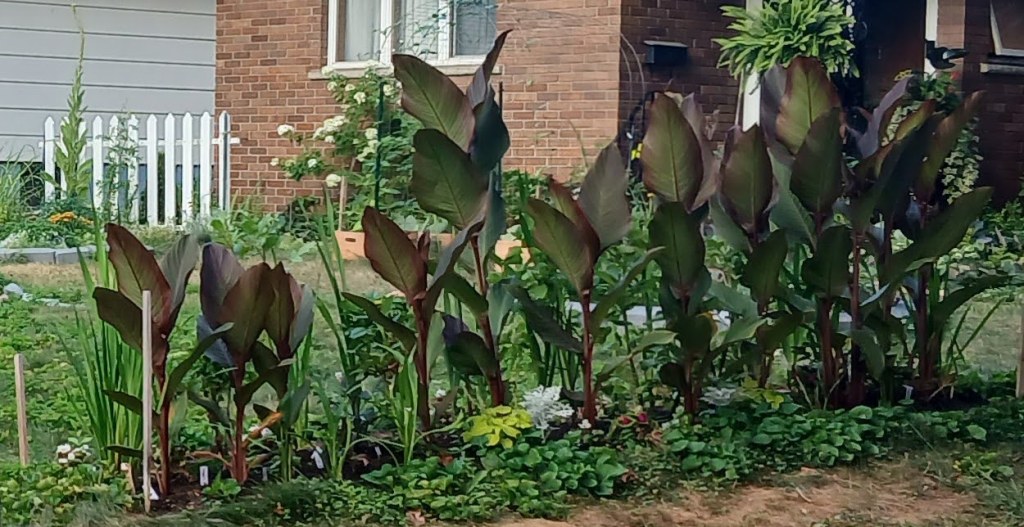
This was a brand-new garden I planted this year, running parallel to the driveway. My idea was to keep all the tender bulbs together in one place so it would be easy to remember to dig them up after the first frost and store them in the basement for the winter. It has been a learning year, but I’m already excited about how to improve it next season.
What grew this year
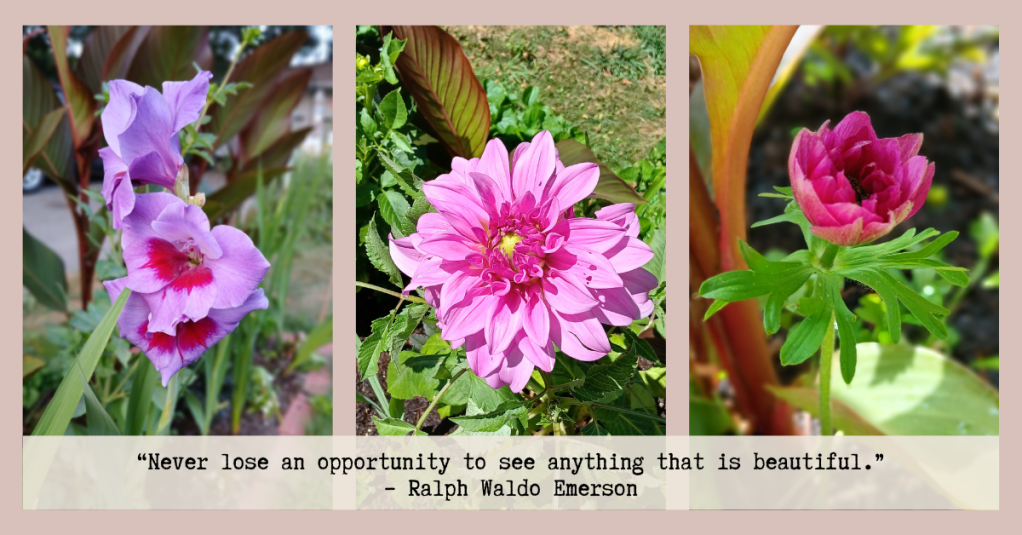
- Cannas – I’ve been trying to grow these for 3 years in different locations and I finally found the place they are happy. The foliage looked lush and tropical, but they still haven’t bloomed yet. I’m hopeful September will bring flowers.
- Dahlias – Just a few blooms so far, but I’m expecting more this fall. I need to label each one by color and height when I dig them up so I’ll know what’s what next year.
- Gladiolas – These did wonderfully and didn’t even need staking since I harvested them quickly for bouquets.
- Anemones – Went in late, so they didn’t do much.
- Calla lilies – My first time growing them, and they were a pleasant surprise—easy, fast, and elegant.
- Tuberous begonias – Slow to start indoors, but once they were outside, the foliage took off. The flowers were a bit underwhelming though.
- Border of wax begonias – Added quick color while waiting for the others to mature, but I wasn’t thrilled with them.
Next year’s plan
- Label and store all dahlias carefully after frost; research the best time to start dahlia seeds indoors.
- Try new gladiolus varieties for more color diversity.
- Plant anemones much earlier in the season and add it to the calendar so I don’t forget.
- Grow more calla lilies, focusing on taller varieties that work better in bouquets.
- Experiment with different tuberous begonia types to find ones with better blooms.
- Replace the border of wax begonias with something more interesting that can take lots of sun.
- Add a taller edging and deeper mulch (not just here, but in all the beds) to help sandy soil hold water and nutrients better.
Lessons learned
The right plant in the right place makes all the difference. Tender bulbs need both patience and planning. Many of them took longer than I expected to bloom, and timing is everything—from when they’re planted to when they’re dug up and stored. The payoff is worth it, though—these exotic, dramatic plants bring something special to the garden, and I can see this bed becoming a highlight in years to come.
The Patio Border
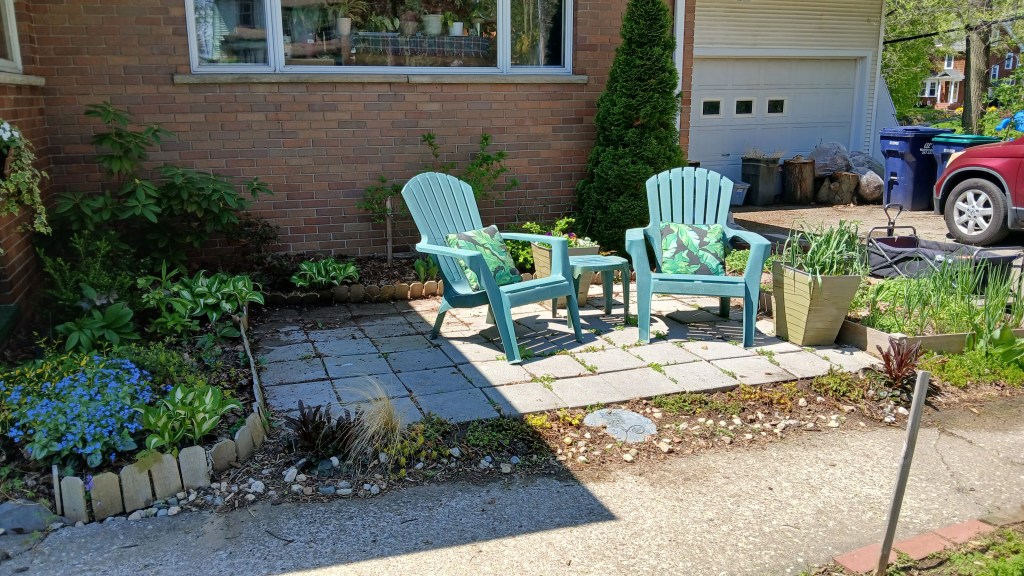
When we moved into the house in 2012, there was no patio out front—just an awkward rectangle of grass between the walkway and the house. A few years ago, I got tired of mowing it, laid down some pavers, and expanded the garden to meet them. Now I love having this space to rest and enjoy the front yard between garden chores. It also gives waiting parents a place to sit during piano lessons, and even doubles as a shady spot where I can set out a little wading pool for my dog. Over the years, I’ve tucked in a mix of shrubs and perennials to create a layered look that feels both welcoming and calming.
Between the walkway and the patio was a narrow strip of grass. I pulled it out and replaced it with a carpet of low-growing sedums and sweet alyssum to make a stepable groundcover. The sweet alyssum overwhelmed the sedum this year, so next year I may keep this spot just sedum and let the alyssum spread elsewhere.
What grew this year
- Arborvitae – Steady and reliable; I’ll add solar lights at Christmas.
- Weigela shrub – Healthy but spreading wide; I’ll prune it to encourage more upright growth.
- Limelight hydrangea – Gorgeous! I need to harvest carefully to keep the shrub balanced. I also planted more in the backyard just for cutting, so these can grow more naturally.
- Boxwood – Thriving. I may experiment with using its foliage in arrangements. (I lost the boxwood on the other side of the house to blight, so I’m keeping a close eye on these.)
- Azaleas and rhododendron – My poor rhododendron gives only three blooms each year, no matter how I fertilize. It’s in full shade, which may be the issue. Still, it fills that corner nicely, so it stays—for now. The azaleas nearby bloom better, though one got attacked by mealybugs so badly that I pulled it out. I hosed down the nearby plants and sprayed neem oil to control them.
- Hostas – Full and green, with the usual slug damage. The thicker-leaved varieties stand up better to pests, and I love dividing and spreading them around.
- Astilbes – Their lacy foliage and feathery blooms are beautiful. One under the window box is struggling, likely because the porch roof blocks the rain. Another in the backyard wants to join the family here by the patio.
- Hellebores – Healthy, and one of the first flowers to bloom in spring. I’ll cut back old leaves to keep them neat.
- Clematis – This one started in the cottage garden but refused to climb the picket fence, so I moved it to an iron porch post where it has better support. I may bring another from the backyard so I’ll have pink and purple blooms twining up the porch.
- Brunnera – A favorite. The heart-shaped leaves light up the shade. I first planted it in my mother’s garden during a makeover and loved it so much I added some here. It’s done so well that I now have matching clumps on either side of the door. I’d love to keep dividing and spreading it until it circles the whole patio and grows under the kitchen window.
Next year’s plan
- Prune the weigela for a more vertical habit.
- Fertilize azaleas and rhododendron with Holly-tone; monitor for pests.
- Put down slug bait around the hostas.
- Transplant astilbes and clematis from the backyard into this bed.
- Add more brunnera to continue the border effect.
- Be mindful when cutting hydrangeas so the shrubs stay balanced.
- Add a thick layer of shredded leaves in the fall to help retain moisture (important since this bed is under the eaves and doesn’t get much rain). Shredding the leaves first means they can stay in place through spring without needing to be raked off.
Lessons learned
Front yards are meant to be enjoyed—it’s worth creating a space that welcomes both family and visitors.
The Container Gardens
I love experimenting with containers around the patio and porch. Pots and window boxes give me the freedom to change things up from season to season, add instant color, and even try out plants I’m not ready to commit to in the ground. Over the years I’ve learned what thrives, what doesn’t, and how to keep them interesting all year long.
The Square Green Patio Pots

Originally clearance finds from Genrich’s, these pots have been a staple in my garden. One of them broke this year, so I’ll need to relocate the plants and soil and toss the pot.
- Hostas overwinter beautifully in them and give reliable foliage.
- Tulips were a disappointment—lots of leaves, no blooms.
- This spring I planted pansies and violas, but the violas outperformed everything. Next year, I’ll skip the pansies and go all-in on violas in multiple colors.
- Coleus thrived and got huge, but the colors felt too bright for the space. Next year I’d like to try something more muted and add a trailing plant to spill over the edges.
The Tropical Patio Pot
Originally planted last year with canna, hibiscus, lantana, and Mexican heather. I overwintered it indoors, then set it back out this spring. All survived, but so far no blooms—likely because they’re too crowded. This fall, I’ll separate the plants when I bring the pot indoors and let them go into dormancy.

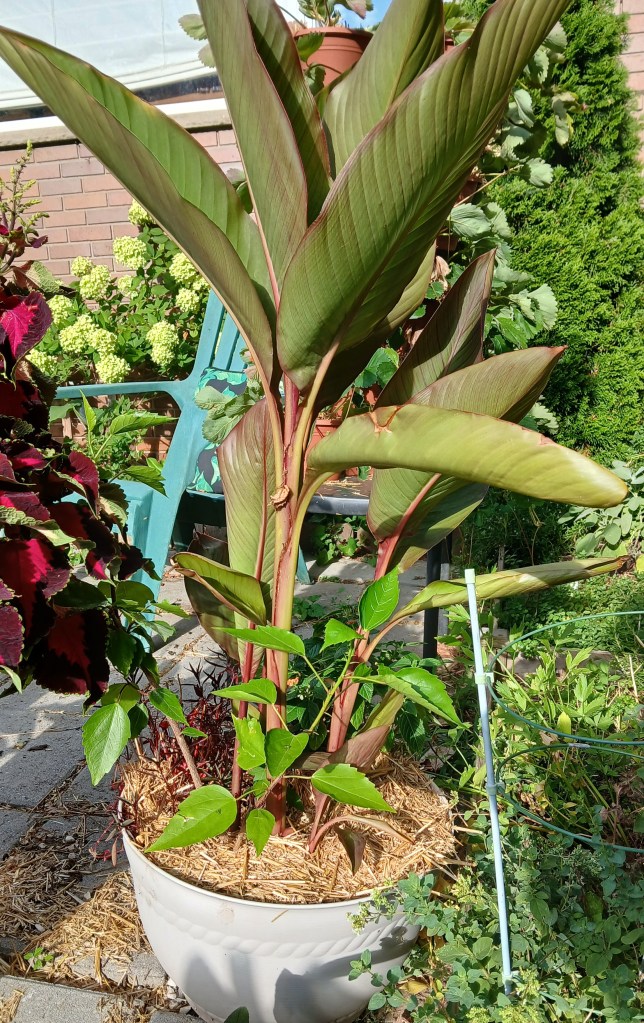
Originally planted last year with canna, hibiscus, lantana, and Mexican heather. I overwintered it indoors, then set it back out this spring. All survived, but so far no blooms—likely because they’re too crowded. This fall, I’ll separate the plants when I bring the pot indoors and let them go into dormancy.
The Window Box

- In spring, I usually fill the window box on my porch with pansies and violas. Violas multiply prolifically in the cool weather, so next year I’ll use only those. I also like to add trailing plants. This year I chose variegated ivy with a yellow tone, which picked up on the yellow violas beautifully.
- In summer, I switch to coleus once the pansies get leggy in the heat. This year, I overwintered several coleus varieties indoors and reused them—saving money and time. (My method: take cuttings before the first frost, root them in water, pot them up, and keep them as houseplants until spring.)
- Creeping jenny and asparagus fern overflowed beautifully, adding texture and softness.
- I tucked in a begonia tuber just to experiment. The foliage was nice, but the flowers were lackluster. Next year I want to research other begonia types—still easy to grow from tubers and easier to tuck into a window box than big nursery-grown clumps.
- Variegated ivy added great texture all season, but bringing it indoors usually leads to aphids. I might leave it in the box to see if it survives the winter outdoors. Normally, I store the container in the garage, but I also enjoy using the box for winter displays with pine branches, red holly berries, and pinecones. Maybe the ivy could even add to the look—like the Christmas carol “The Holly and the Ivy.”
The Porch Pots
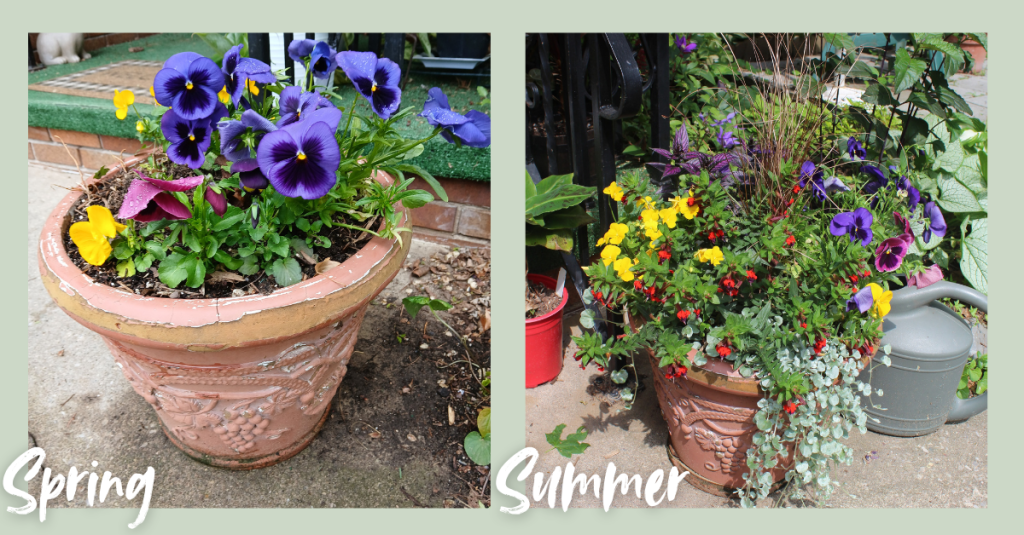
I keep one large pot—sometimes two—on either side of the porch step. Like the window box, I start with pansies and violas for early color, then add more plants as the seasons progress.
- Spring – pansies and violas
- Summer – cuphea, silver falls, Persian shield, and painted grass for texture and vibrancy
- Fall – remove tired pansies/violas and tuck in a small mum. If the whole arrangement looks worn out, I sometimes flank the porch with a pair of large mums instead.
Houseplant Haven
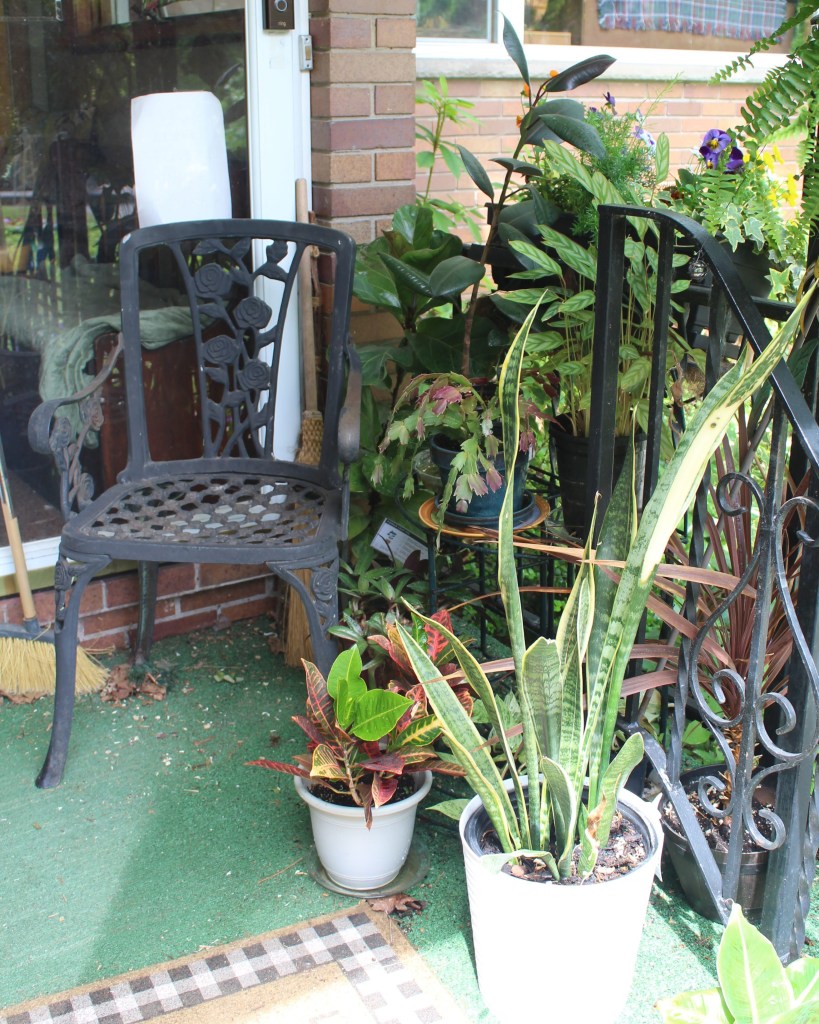
During the summer, my houseplants come outside for a long breath of fresh air. I keep them on a wire shelf next to an iron chair on the porch. They put on amazing growth during their “vacation,” and it’s so much easier to water them with a hose than carry around a little watering can inside.
Next year, I’ll do the same—rotating different plants outdoors to give them all a turn in the sun. As I bring them back inside, I’ll check for pests, repot them with fresh soil, and add beneficial nematodes to kill any fungus gnat larvae that may be hiding in the soil.
Notes to Self for Next Year
- Replace old potting soil in porch and patio pots and the window box, leaving room at the top for mulch.
- Remember that containers dry out quickly in the sun—they’ll need consistent watering.
- Consider budgeting for a pair of elegant urn-shaped containers to flank the entrance.
Lessons Learned
Containers are like a living sketchbook—I love looking back at photos from previous years to see what little “works of art” I created in the same pots. Some combinations worked beautifully, others fell flat, but the best part of container gardening is that you can always edit and experiment until you get the look you want.
The Kitchen Border
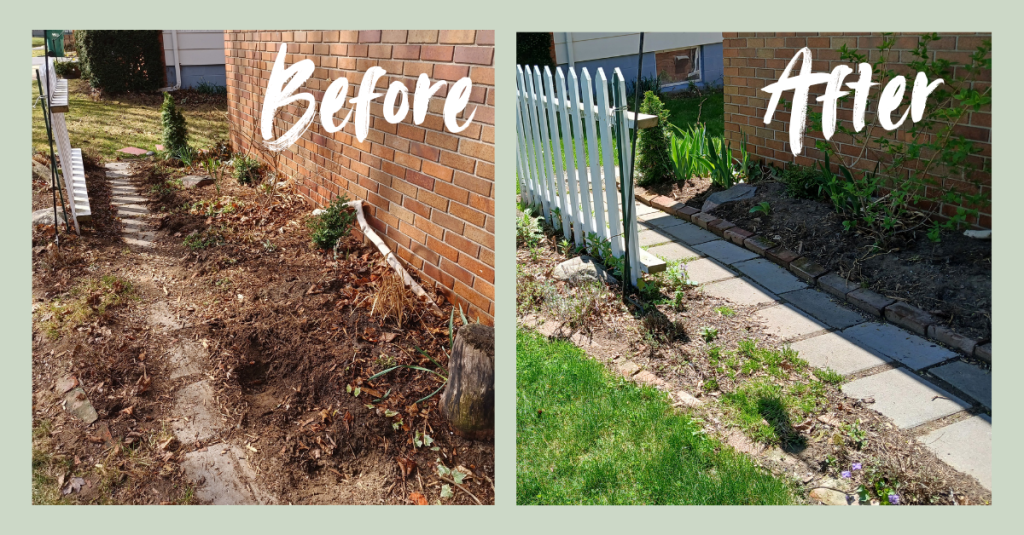
This foundation border sits right below my kitchen window, so it’s one of the first things I see each morning. I can’t wait until the limelight hydrangea grows tall enough for me to see its big blossoms through the window—it will be so romantic. I love having matching hydrangeas on each side of the house, framing the view.
I had a little foot path of stepping stones between this garden and the tea garden in front of it with a border of daffodils in the spring, annuals in the summer, and mums in the fall, and I loved it. But in recent years the daffodils have been struggling, ever since I put in the picket fence behind the tea garden, casting shade on the kitchen border. Plus I wanted to widen the path in order to get a wagon down it on my way to the flower farm instead of going around the tea garden. So I took out the daffodils and mums and moved them to my potager garden (more on that in the potager post), and widened the path with more pavers. The Kitchen border is now simpler and I’m adding more hostas to fill it in.
What grew this year
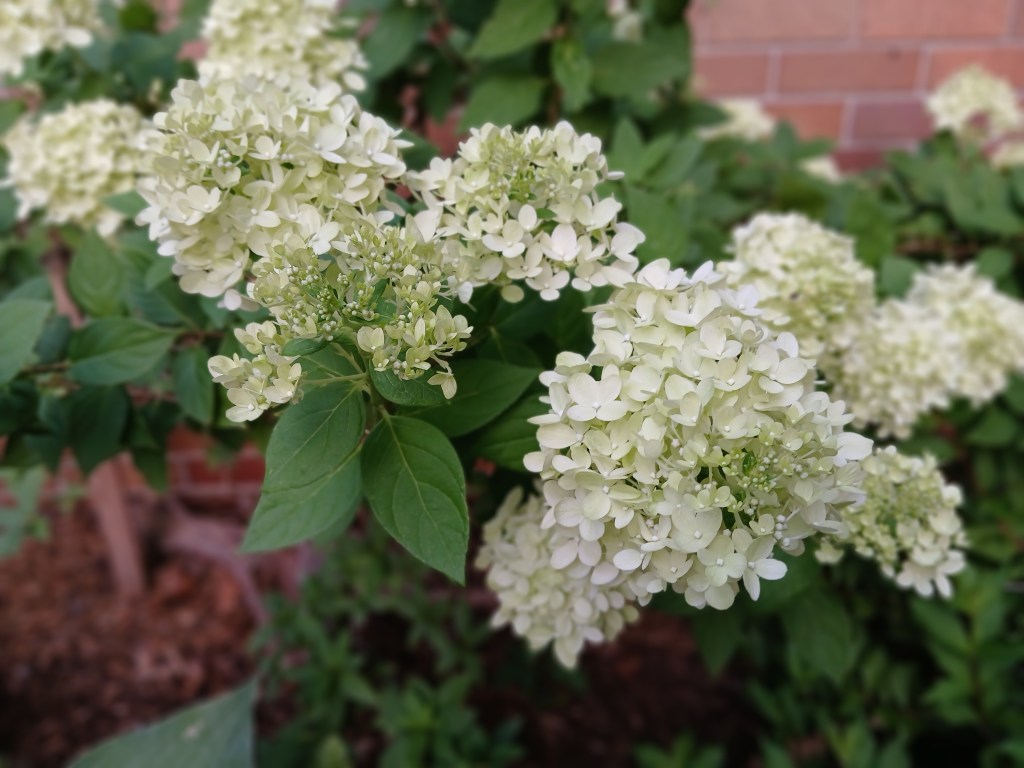
- Limelight hydrangea – Still young, but growing well.
- Montauk daisy – Transplanted here this spring and already filling in quickly. I’ll need to keep it trimmed, but I look forward to using its bright white blooms as cut flowers.
- Butterfly Bush – This has been struggling here and just doesn’t go with the vibes. I’m going to the move it to the back yard near my wildlife garden.
- Hostas – Reliable and lush, thriving in this shady foundation spot.
- Lamb’s Ear – My daughter shared some with me and I planted it here between some hostas. Looking forward to it filling in. I love the soft fuzzy leaves!
- Irises – Purple varieties shine here, but the pink and yellow ones don’t photograph well against the brick wall.
- Baptisia – Slow-growing, but I’m hoping it will eventually spread into a nice clump. The beautiful foliage is useful in bouquets.
- ‘My Monet’ weigela – Much happier here than in the shade. Its foliage color is beginning to return.
Next year’s plan
- Tag the purple irises to keep and consider moving the pink and yellow ones to a better location.
- Monitor and trim the Montauk daisy so it doesn’t overwhelm its neighbors.
- Encourage baptisia by keeping the area mulched and weed-free—it may just need more time to settle in.
- Continue caring for the weigela in its sunnier spot.
- Add shredded bark mulch over the leaf mulch for a tidier look, making sure to pull it away from the base of each plant.
- Consider installing soaker hoses under the mulch to improve watering (especially since this border and the patio border are both under wide eaves and don’t get much rain).
Lessons learned
Even though this border is mostly hidden from the road by the picket fence behind the tea garden, except for the limelight hydrangeas peeking above it, anyone who comes up to the door sees it. I love how the path takes your eye and makes you wonder what’s around the corner? It was worth it to widen the path and give this foundation garden the attention it deserves.
The Tea Garden
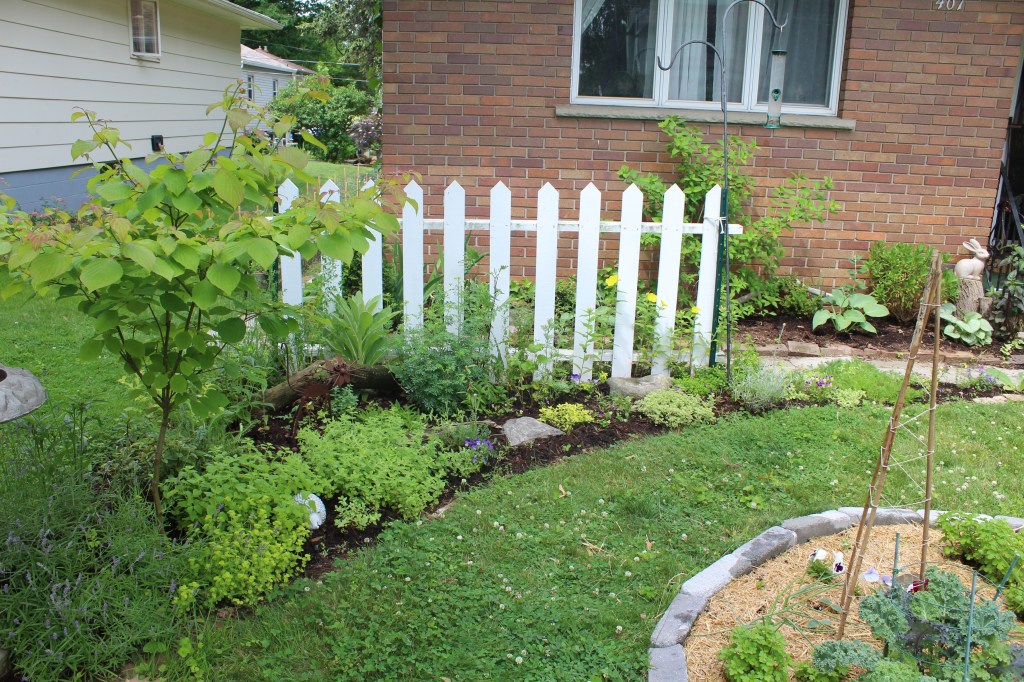
My tea garden was one of the first gardens I added to the front yard that ventured out into the lawn, so many of the plants here are now well established. It’s full of medicinal herbs for making teas, with a few culinary herbs still mixed in. Over the years it’s become one of my favorite places to gather plants not just for myself, but for my family.
I’ve started an annual tradition of making homemade tea blends to give my mom and three sisters for their birthdays. Since all our birthdays fall between October and January, we usually gather in early December for a joint luncheon and exchange gifts. It’s such a joy to share jars of dried leaves and flowers, each one labeled with their health benefits—“their fruit will be for food, and their leaves for healing” (Ezekiel 47:12).
Not every plant has gone exactly where I intended. For instance, last year I thought I was ordering viola seeds for my windowbox, but they turned out to be Johnny Jump-ups. Instead of being frustrated, I transplanted them to the tea garden, where they added cheerful color and now reseed themselves. This year I even gathered violets from my lawn before they were mowed down. They were dog violets (a little grassy tasting), but still a good spring tonic. Next year, I’d like to add sweet violets for better flavor.
This garden is both practical and beautiful—a living apothecary right outside my door.
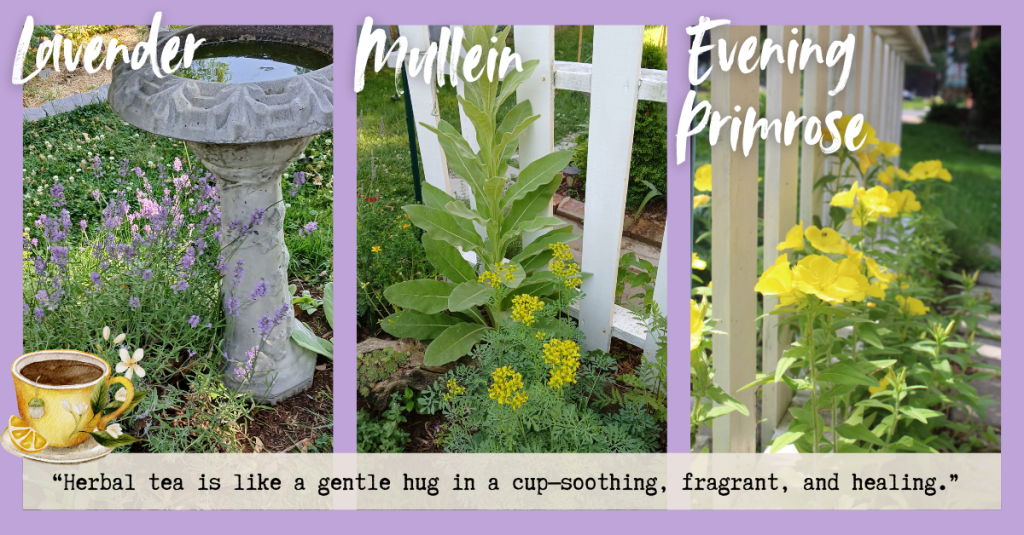
What grew this year (in alphabetical order)
- Chamomile – Calming, helps with sleep and digestion.
- Curry Plant – Fragrant, mostly ornamental, sometimes used for digestion.
- Evening Primrose – Calming, supportive for women’s health.
- Johnny Jump-ups – Pretty garnish, mild expectorant qualities.
- Lamb’s Ear – Not for tea, but a useful soft, healing leaf.
- Lavender – Relaxing, helps with stress, sleep, and headaches.
- Lemon Balm – Gentle stress relief, uplifting for mood.
- Lemon Thyme – Antimicrobial, good for coughs and sore throats.
- Lemon Verbena – Bright citrus flavor, relieves tension and indigestion.
- Marjoram – Calming for nerves, helps ease headaches.
- Mallow – Soothes throat and digestive tract.
- Mullein – Excellent for soothing the lungs and coughs.
- Oregano (Greek, Golden, Variegated) – Antibacterial and soothing for respiratory issues.
- Peppermint – Cooling, relieves headaches, eases digestion, helps focus.
- Pineapple Mint – Refreshing flavor, aids digestion.
- Pineapple Sage – Sweet fruity flavor, uplifting and calming.
- Rue – Historically used for headaches and digestion (use sparingly).
- St. John’s Wort – Known for lifting mood and easing mild depression.
- Tansy – Traditionally used for repelling pests; not for drinking.
- Thyme – Antimicrobial, helpful for colds, coughs, and sore throats.
- Valerian – Potent sleep aid and relaxant.
- Yarrow – Traditionally used to ease fevers and support circulation.
Next year’s plan
- Add sweet violets for better tea flavor.
- Sprinkle sweet alyssum seeds along the border this fall—they’ll sprout early in spring and add beauty (and are edible).
- Keep scheduling harvests and drying sessions so herbs can be stored at their peak.
- Consider adding labels with health benefits to jars as part of the tea-blend gifting tradition.
Lessons learned
This garden works best when I stay on top of harvesting—it’s easy to let herbs grow leggy and lose their potency if I don’t dry them at the right time. I also learned that even “mistakes” (like those Johnny Jump-ups) can end up being happy accidents that add beauty and usefulness. The tea garden has taught me to be both intentional and flexible—and to enjoy the gifts of God’s creation right outside my door.
The Shade Garden

I’ve gone back and forth on what to call this garden. At first it was just “Shrub Row,” because that’s all it was: a line of lilacs, forsythia, viburnum, and ninebark. But then the viburnum was destroyed by beetles, and the ninebark developed a bad case of fungus. I replaced them with a ‘Pinky Winky’ hydrangea, and over time I tucked in tulips and perennials, transforming the space into much more than a row of shrubs.
I tried calling it the “Tulip Bed,” but that seemed odd when most of the year there were no tulips in sight. Now that I’ve filled it with shade-loving plants, I simply call it my Shade Garden. (I differentiate it from my backyard “Deep Shade Garden,” which I’ll share in another post.)
This garden is pretty full now, but I keep experimenting. It gets some sun in early spring before the big maple next door leafs out, so spring bulbs do well. By summer it’s a true shade bed, and I’ve been finding plants that really pop against the darker backdrop.
What grew this year
- Shrubs: Lilacs, forsythia, and a thriving ‘Pinky Winky’ hydrangea.
- Spring bulbs: Tulips (though deer nibbled many of them despite fencing and sprays).
- Perennials/groundcovers: White candytuft, peppermint, spurge, mums, hostas, and heucheras.
- Annuals: Coleus and polka-dot plant (not doing great in my sandy soil).
- Forget-me-nots: Sweet patches that bloomed alongside the tulips. I’ve been transplanting them and scattering seed to encourage more.
Next year’s plan
- Plant the new tulip bulbs ordered this fall—still deciding whether to risk them here again or place them elsewhere. If they stay here, protect them with netting in addition to spray and fencing.
- Add a few more white mums for fall interest—white pops so well in the shade.
- Keep transplanting forget-me-nots into this bed for a stronger spring display with the tulips.
- Continue replacing struggling coleus and polka-dot plants with heucheras or hostas from the backyard.
- Set up netting in early spring to discourage deer damage before tulips bloom.
Lessons learned
- A garden’s identity can evolve. What started as just “Shrub Row” has become a mixed bed that celebrates the charm of shade planting.
- Gardening is about discovery—sometimes plants just don’t fit. Although coleus and polka-dot plants seemed like a good idea, they didn’t thrive in my sandy soil and their colors got lost in the shade. White and silver plants, however, truly shine here, so I’ll be leaning into those.
The Rock Garden

Now we come to one of my favorite gardens in the front yard—possibly the favorite. This space grew out of loss and renewal. Once, a beautiful maple tree stood in the center of my yard, but over the years it began to decline. To distract from the dying branches, I planted a border of flowers around its base. When the tree finally had to come down this spring, some kind men from my church volunteered to help, and I was deeply moved by their generosity.
The stump had to stay because of a gas line beneath it, so I turned it into the centerpiece of a brand-new rock garden. I transplanted plants from my old, too-shady rock garden and added new favorites around the stump. With pavers, river stones, and a statue of an angel tucked among the blooms, it feels like an ever-changing work of art. It’s the first thing I see when I walk out the front door, and it brings me joy every day.
What grew this year
- Hostas – Left over from the tree garden days; lovely in spring but scorched in summer sun. I’m slowly moving them elsewhere.
- Ferns – Graceful in spring, but not suited for full sun. They’ll be replaced (possibly with Adirondack ferns).
- Autumn sedum – Several varieties, thriving in full sun. Easy to propagate, beautiful for both the garden and bouquets.
- Stonecrop – Endless colors, textures, and growth habits; fills cracks between rocks but needs thinning to prevent takeover.
- Pincushion flower (Scabiosa) – Delicate blooms held on wiry stems that sway beautifully in the breeze.
- Iceland poppy – Lovely but fleeting; not my favorite for long-term display.
- Columbine – Pretty, but happier in part shade, so I’m relocating them.
- Pasque flower – Perfect for an alpine feel. Short but charming, and reblooms with deadheading.
- Dianthus (Pinks) – Bright pops of color and reliable bloomers. I may experiment with carnations for longer stems.
- English daisy – Sweet and cheerful, easily divided and transplanted.
- Spring bulbs – Snowdrops, crocus, squill, mini daffodils, grape hyacinths, and full hyacinths (all short, per my “rock garden rule”).
- Basket of Gold – A vibrant cushion of yellow in spring; I scattered seeds for future patches.
- Japanese blood grass – Thriving here with great texture and color. Needs monitoring so it doesn’t spread too far.
- River stones – Brought over from the old garden, they hold the slope in place and create a natural stage for sedums.
- Angel statue – Adds a touch of serenity and makes the space feel sacred.
Next year’s plan
- Continue moving hostas and ferns to shadier spots.
- Try adding more alpine-type perennials that stay compact and suit rocky soil.
- Watch the Japanese blood grass for spreading.
- Keep propagating sedum to fill gaps naturally.
- Possibly add carnations for longer-lasting cut flowers.
- Leave the stump simple—it’s beautiful enough without another pot on top.
Lessons learned
- A garden can rise out of loss. What began as a solution for an eyesore became a source of beauty and healing.
- Working with limitations (like a stump you can’t remove) often sparks the most creativity.
- Rock gardens shine with contrast—low-growing sedums, bright spring bulbs, airy perennials, and strong textures all balance one another.
- Sometimes, simpler really is better.
Closing
Thank you for coming along on this little tour of my front yard gardens and letting me ramble about what I planted this year and what I’m dreaming up for next season. I know it’s only August, but that’s the way of a gardener—we’re always planning ahead, even as we’re still tending the present. A gardener’s work is never truly done, but the joy of watching the gardens grow and sharing them with others makes every bit of effort worthwhile
Discover more from The Shy Garden
Subscribe to get the latest posts sent to your email.
