The Tea Garden
The Tea Garden
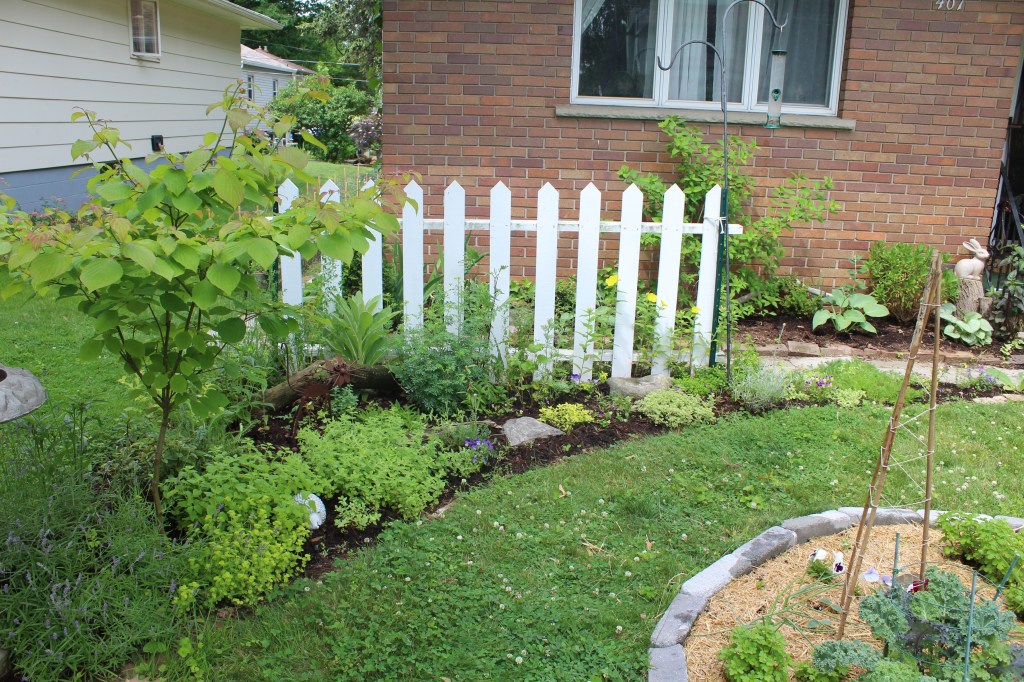
My Tea Garden is one of the most practical and rewarding spaces in my yard—a little apothecary right outside my door. It’s filled with medicinal herbs that can be used fresh or dried for teas, with a sprinkling of culinary herbs woven in. Over time, this garden has become a favorite place to gather plants not only for myself, but also for my family.
This was one of the first beds I carved into the front lawn, so many of the plants are now well established. Each year, it feels like the garden offers me more—whether that’s fragrant leaves, colorful blossoms, or simple joy in seeing what comes back.
A Family Tradition
One of my favorite things about this garden is how it’s shaped a new tradition. Every fall, I create homemade tea blends to share with my mom and three sisters. Since all of our birthdays fall between October and January, we celebrate together with a December luncheon and exchange gifts. It’s become a joy to prepare jars of dried herbs and flowers—each one labeled with its healing qualities—echoing the beautiful promise from Ezekiel 47:12: “Their fruit will be for food, and their leaves for healing.”
Surprises and Happy Accidents
Not every plant ended up where I originally planned. Last year, I accidentally ordered Johnny Jump-ups instead of violas for my window box. Rather than being frustrated, I tucked them into the Tea Garden where they now reseed freely and add cheerful color. Even violets gathered from my lawn—grassy-tasting dog violets—became part of my spring harvest. Next season, I’d like to add sweet violets for a more flavorful tea.
What’s Growing This Year
Here’s a look at what’s thriving in my Tea Garden right now:
- Chamomile – Calming; supports sleep and digestion
- Curry Plant – Fragrant; mostly ornamental, mild digestive uses
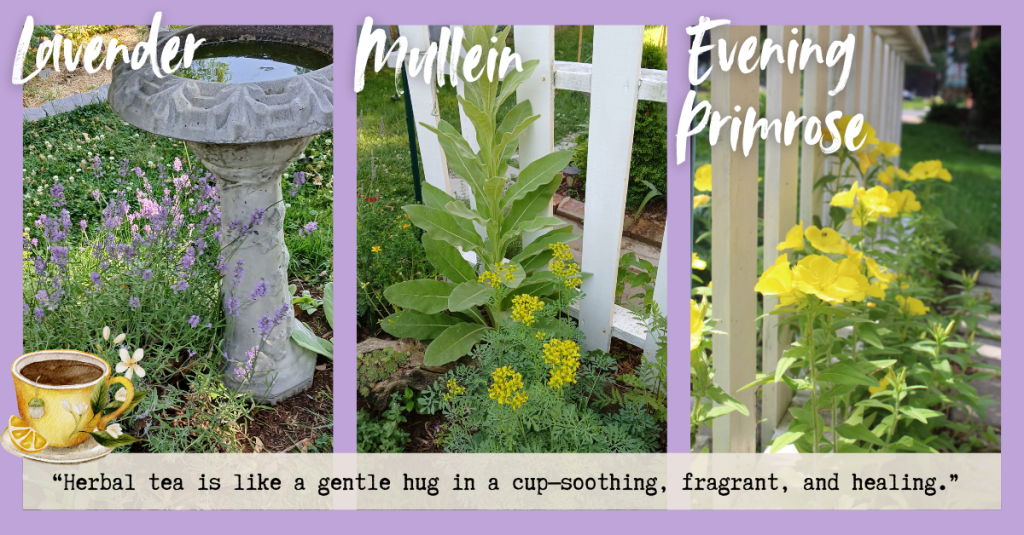
- Evening Primrose – Calming; supportive for women’s health
- Johnny Jump-ups – Colorful garnish; gentle expectorant
- Lamb’s Ear – Healing, soft leaves (not for tea)
- Lavender – Relaxing; helps with stress, sleep, and headaches
- Lemon Balm – Gentle stress relief; uplifting for mood
- Lemon Thyme – Antimicrobial; good for coughs and sore throats
- Lemon Verbena – Bright citrus flavor; relieves tension, indigestion
- Marjoram – Calms nerves; eases headaches
- Mallow – Soothes throat and digestion
- Mullein – Excellent for coughs and lung support
- Oregano (Greek, Golden, Variegated) – Antibacterial; respiratory support
- Peppermint – Cooling; relieves headaches, aids digestion, improves focus
- Pineapple Mint – Refreshing; supports digestion
- Pineapple Sage – Sweet, fruity flavor; uplifting and calming
- Rue – Traditional use for digestion and headaches (sparingly)
- St. John’s Wort – Known for mood support and easing mild depression
- Tansy – Insect repellent; not for drinking
- Thyme – Antimicrobial; helpful for colds and coughs
- Valerian – Potent sleep aid and relaxant
- Yarrow – Traditionally used for fever and circulation support
Looking Ahead
Next year, I hope to:
- Add sweet violets for better flavor in teas
- Sow sweet alyssum along the border for early spring color (and edible flowers!)
- Stay consistent with harvesting and drying so herbs are preserved at their best
- Create labeled jars with both plant names and their benefits as part of my tea-blend gifts
Lessons Learned
This garden thrives when I stay on top of harvesting and drying. The more I schedule those tasks, the more abundant and useful my tea blends become. It’s a space that rewards both diligence and delight—practical and beautiful all at once.
Discover more from The Shy Garden
Subscribe to get the latest posts sent to your email.
